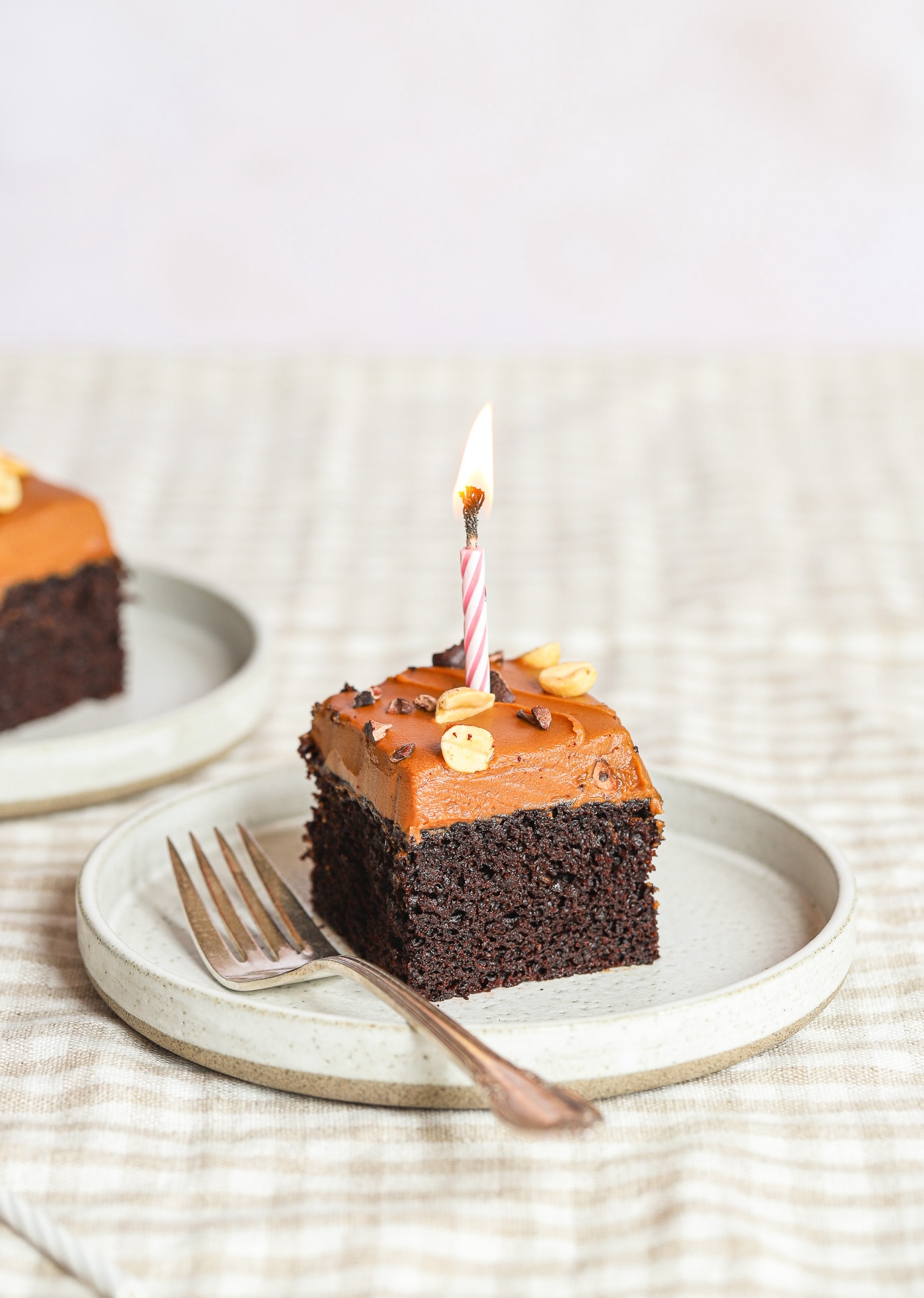
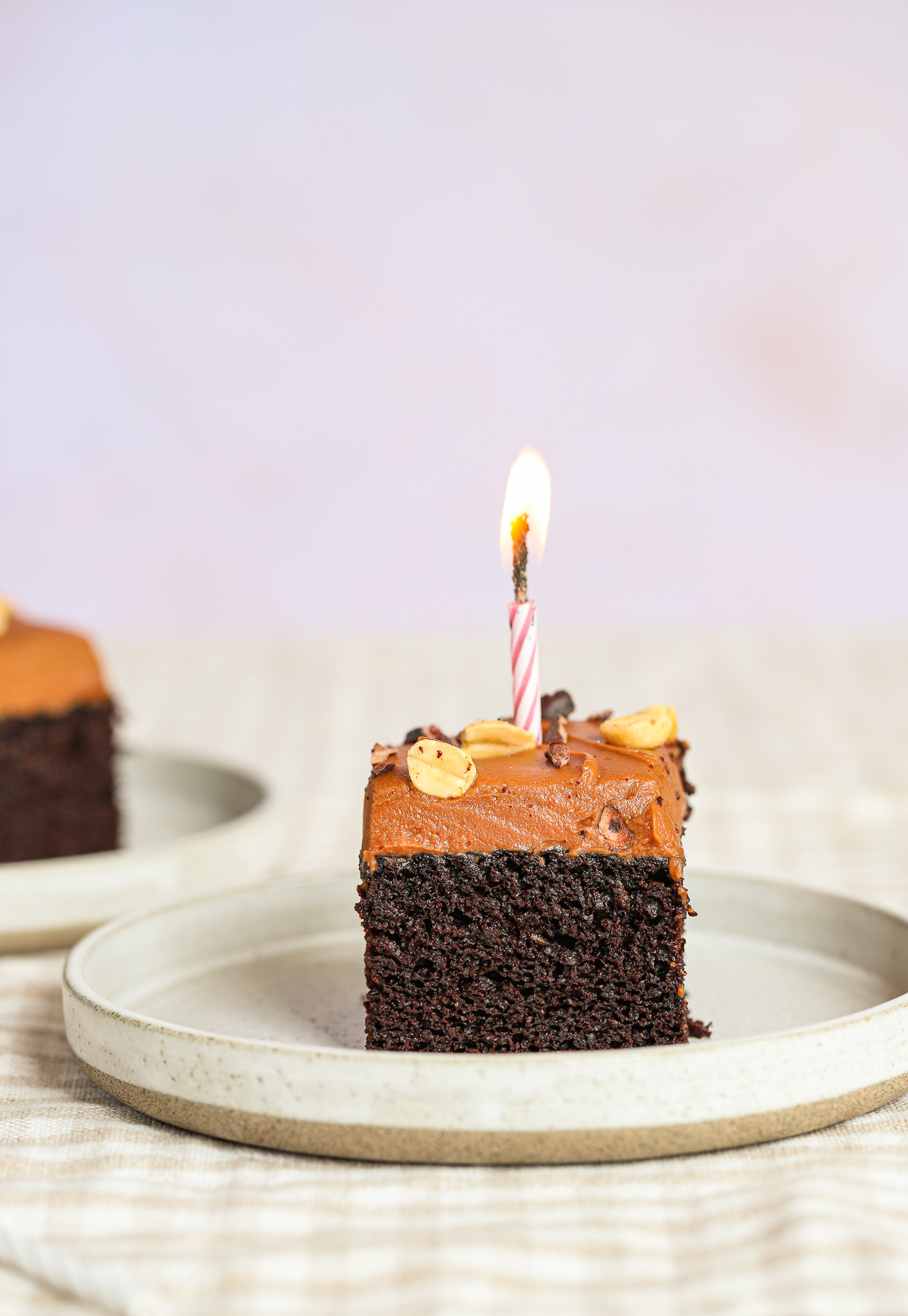
I first made this cake for Phoebe’s 1st birthday at the Rose Garden in San Jose. It sat patiently waiting on a picnic table at the edge of a huge field surrounded by roses in every color, until it was finally time to sing “Happy Birthday.” That first bite was a revelation; the whipped caramel ganache was unlike any frosting I had ever experienced. Since then, this cake has been a steadfast birthday companion. It was brought to Phoebe’s second birthday at Derby Park; we have a photo of her opening her mouth like a great white shark to consume a forkful of her slice. This cake ushered in Auntie Cristy’s 60th year at the house she rented for a pool party; it was made into a layer cake and brought to the beach so Jonji could play volleyball and share cake with his friends. It’s been at one of Phoebe’s cat-themed birthday parties, as well as Wren’s Wilder Ranch party where we served cake under the shade of the apple trees. Many candles have been gently poked into the glossy, decadent icing, taking care to avoid the peanuts and nibs. Many birthday songs sung across its sweet expanse to those with cheeks puffed and ready to wish.
This cake gets compliments every time I serve it, and kids and adults alike adore it—it’s certainly my most requested cake recipe. The recipe, which I have barely changed at all, is from Edd Kimber’s One Tin Bakes (a phenomenal book). It’s the first recipe in the book and he writes, “If there is one cake I want you to try, it’s this one.” I’m so glad I listened to you, Edd.
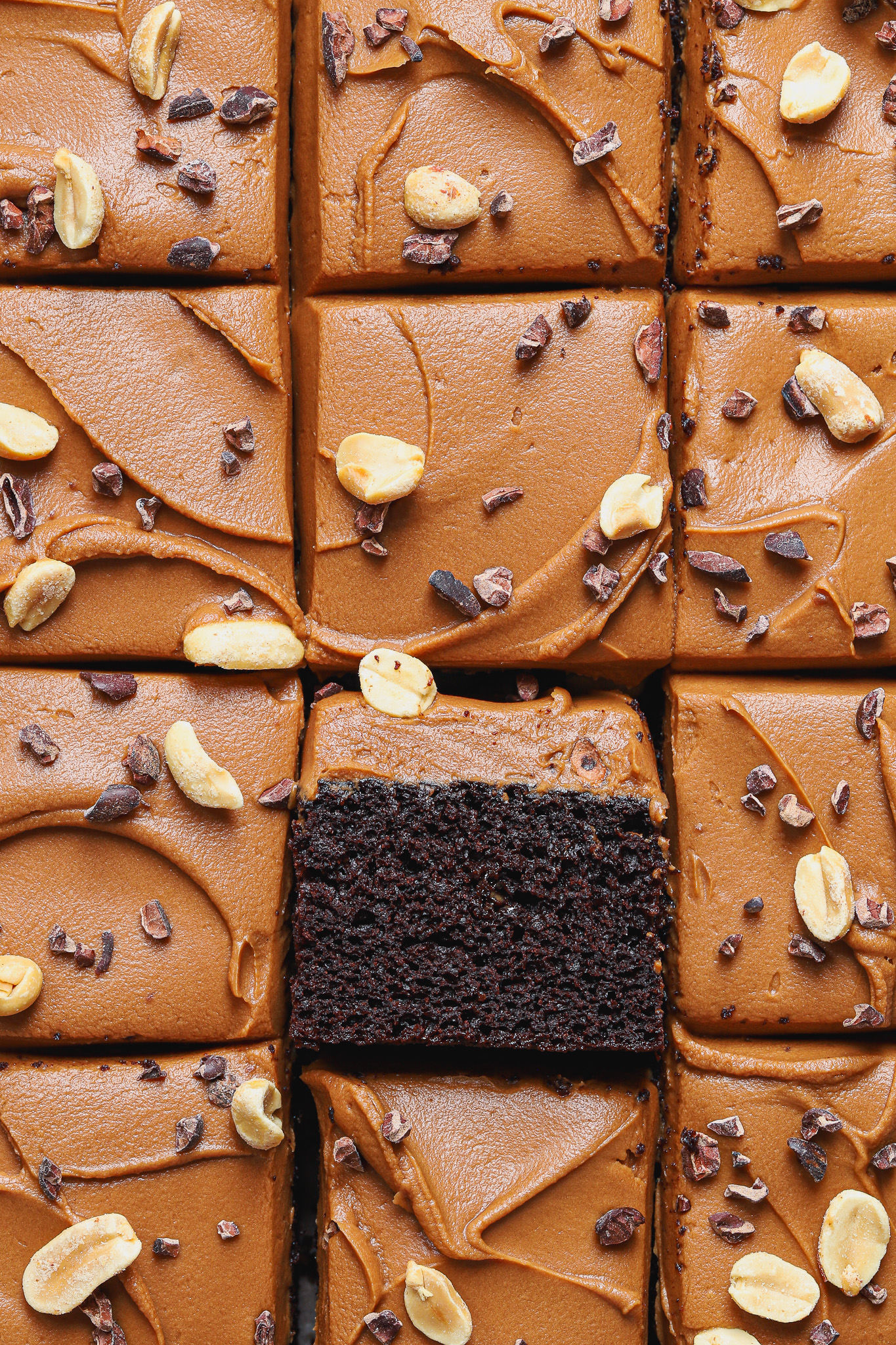
Let’s be clear: I love a good layer cake. Stacked and filled with all manner of frostings and fillings, then decorated minimally or maximally, they’re beautiful, symmetrical, and they give you a chance to show off any piping skills or surprise fillings. This cake is not that; it’s a sheet cake, the most utilitarian of all the cake forms. I carry it to events in the tin it was baked in, no frills or fancy pipework in sight. But don’t let the supposed mediocrity of a sheet cake fool you—this one is next level. The cake itself is plush and moist, boasting an open crumb that’s taller than it has any right to be. The frosting is essentially a caramel that gets mixed with a lot of milk chocolate to make a caramel-ganache hybrid. The whole mixture is then chilled until it achieves a loose but spreadable texture, at which point it is whipped into a luxurious, decadent frosting. Sprinkled with cacao nibs and salty peanuts for crunch, it becomes a cake I would gladly eat every single day.
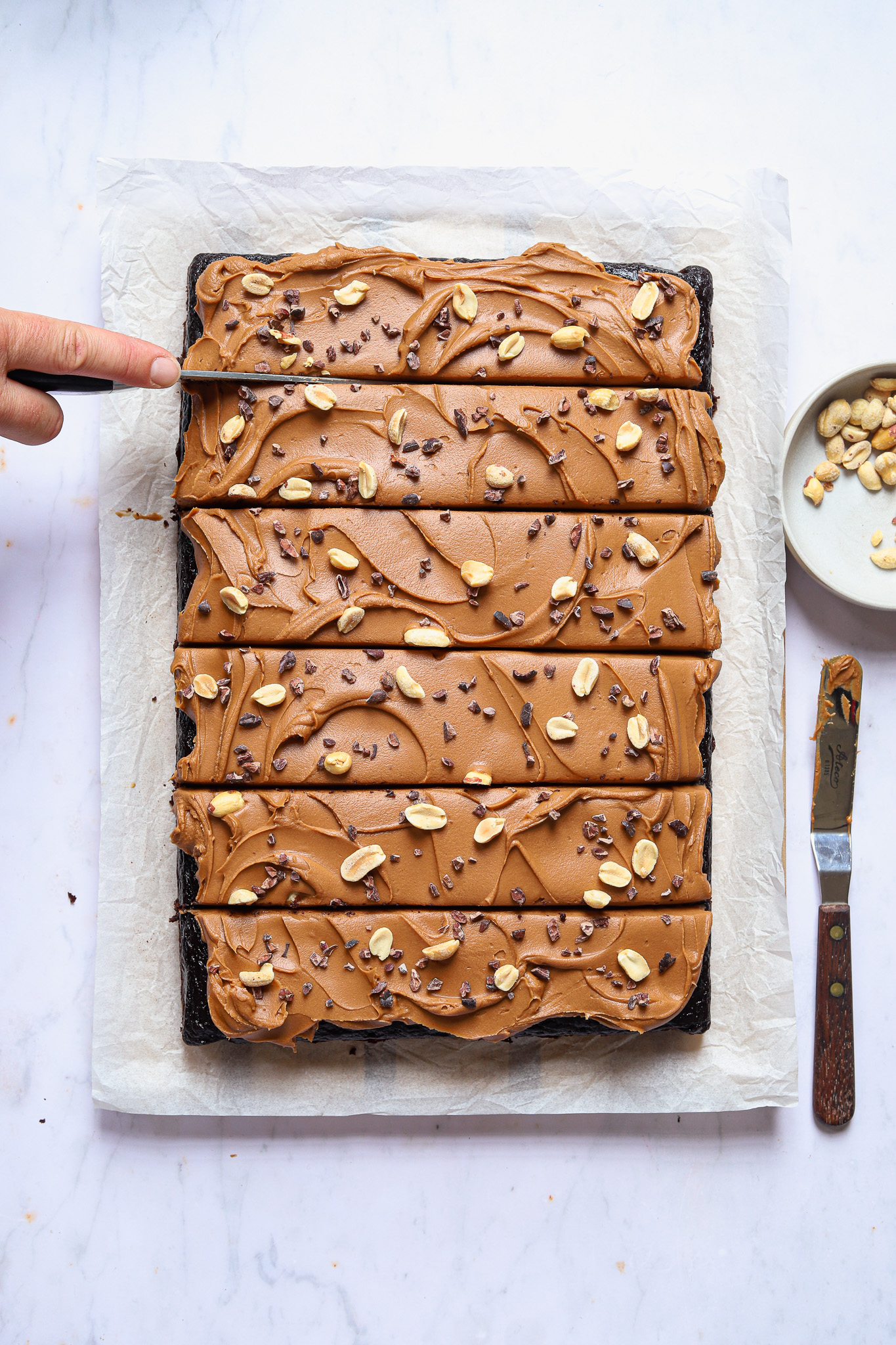
One tip for all sheet cakes being brought to a party: slice the cake before you frost it! Remove the cake from the tin using the parchment paper, slice it into even squares, then transfer it either back to the tin or whatever platter you’ll be serving it on. Make sure all the pieces are snugly flush with each other, then frost. No one will realize how incredibly easy you’ve made everyone’s lives until you start lifting slices out with a fork like a damn magician. It’s perhaps my best baking trick, and I welcome you to adopt it.
Chocolate Sheet Cake with Whipped Chocolate-Caramel Ganache
serves about 24 people / recipe adapted from Edd Kimber’s book, One Tin Bakes
for the caramel ganache:
200g milk chocolate, finely chopped (or a mix of milk and dark chocolate)
400ml heavy cream
200g fine granulated sugar (also called caster or superfine sugar)
50g (3 1/2 tbsp) unsalted butter, cubed
1 tsp flaky sea salt
1 tsp vanilla extract
for the cake:
250g (2 cups) all-purpose flour
75g cocoa powder
1 tsp baking powder
2 tsp baking soda
1/2 tsp fine sea salt
300g brown sugar
2 large eggs
100ml neutral oil, such as avocado or grapeseed
225ml sour cream
225ml hot brewed coffee or espresso
to decorate:
salted peanuts
cacao nibs
Since the caramel ganache needs a few hours to chill, make that first. Put the finely chopped 200g chocolate in a medium-large bowl. Bring 400ml heavy cream to a simmer in a small pot, then remove from the heat.
While the cream heats, pour 200g fine granulated sugar into a medium saucepan (don’t use cast-iron—you won’t be able to see the sugar change color very well) and shake to disperse it into an even layer. Melt the sugar over medium heat, without stirring, until part of it is bubbling and copper-colored. Then slowly pull the sugar from the outside of the pan in with a rubber spatula, until all the sugar is starting to melt. Stir only as needed to avoid any burning spots, and cook until the sugar is completely dissolved and the caramel is the color of a copper penny—it might even be smoking a little bit. Immediately add 50g of cubed butter, 1 tsp flaky salt, and half of the warm cream. The caramel will bubble and hiss loudly, so watch out for your fingers, but try to stir as much as you can while this occurs. Once the bubbling has mostly subsided, pour in the rest of the cream and 1 tsp vanilla and stir until smooth. If there are some lumps, cook over medium-low heat, stirring often, until smooth. (If you’re still struggling with lumps, use a sieve when you pour it out of the pan.) Pour the caramel over the chopped chocolate and let it sit for a few minutes. Then stir until the chocolate has fully melted. Cover the bowl with a lid or plastic wrap and let it chill in the fridge for at least 3 hours, or until you have a spreadable but light consistency (Edd says it should feel like a light buttercream).*
While the ganache chills, make the cake. Preheat your oven to 350°F. Lightly spray or grease a 9×13-inch baking tin (I prefer metal over glass or ceramic—my favorite pan is made by Magic Line, which makes a pan with super straight sides so you don’t have to deal with the weird rounded corner pieces). Line the tin with parchment paper and set aside.
Sift 250g (2 cups) all-purpose flour, 75g cocoa powder, 1 tsp baking powder, 2 tsp baking soda, and 1/2 tsp fine sea salt together into a large bowl. Whisk in 300g brown sugar. In a medium bowl, whisk 2 large eggs, 100ml neutral oil, and 225ml sour cream. Pour the wet ingredients into the dry and mix partially, then pour in 225 ml hot coffee and whisk until the cake batter is smooth. Pour the batter into your prepared pan and spread it evenly with a silicone or offset spatula. Bake the cake for 25-30 min until a toothpick inserted into the middle comes out mostly dry (a couple of moist crumbs attached are ok) and the cake bounces back to a light touch. Cool the cake completely in the tin before you attempt to move (and decorate) it.
If you plan to pre-slice the cake (which I recommend if you’re bringing this cake anywhere): remove the cake from the tin using the parchment paper, slice it into even squares, then transfer it either back to the tin or whatever platter you’ll be serving it on. Make sure all the pieces are snugly flush with each other, then frost.
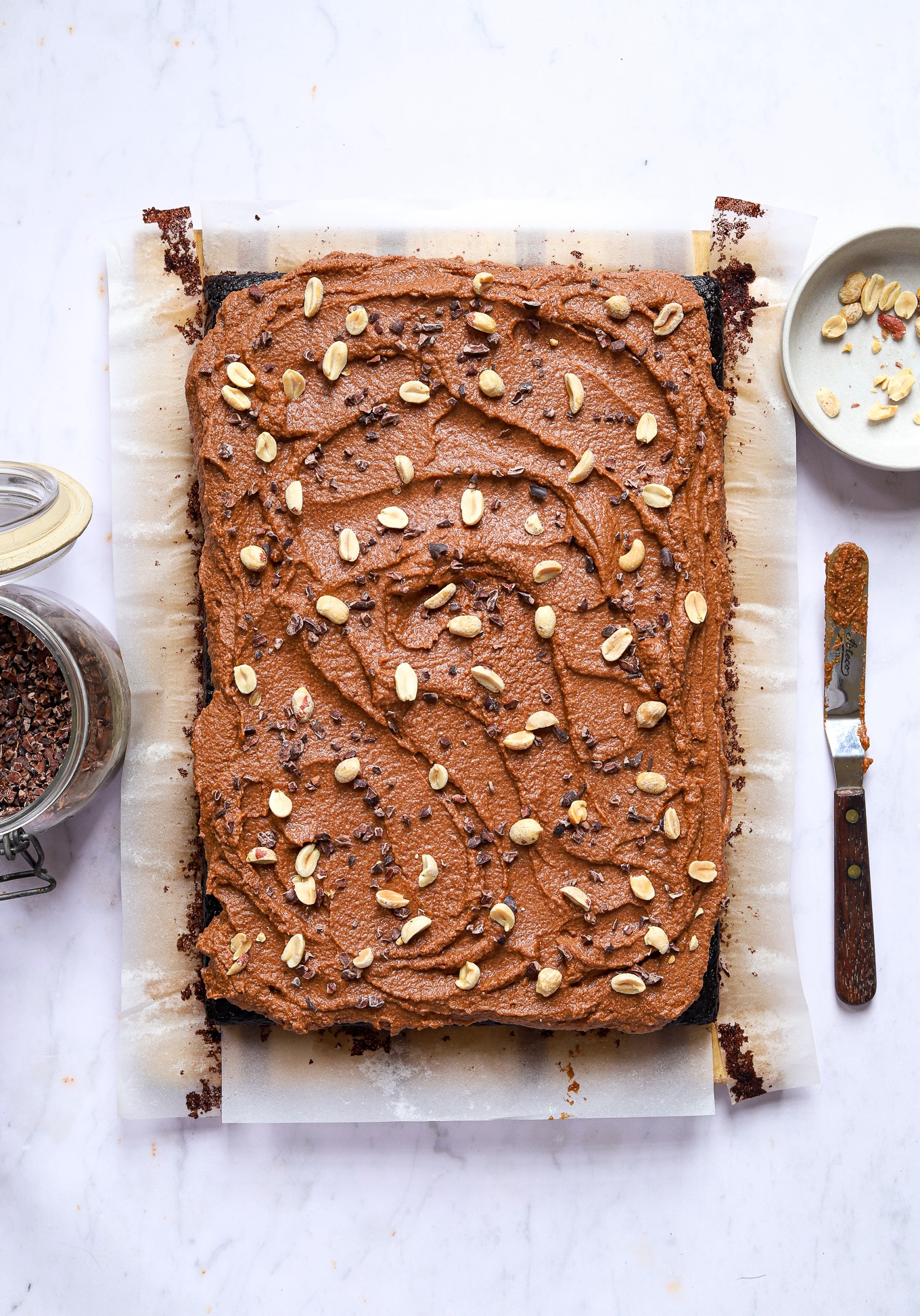
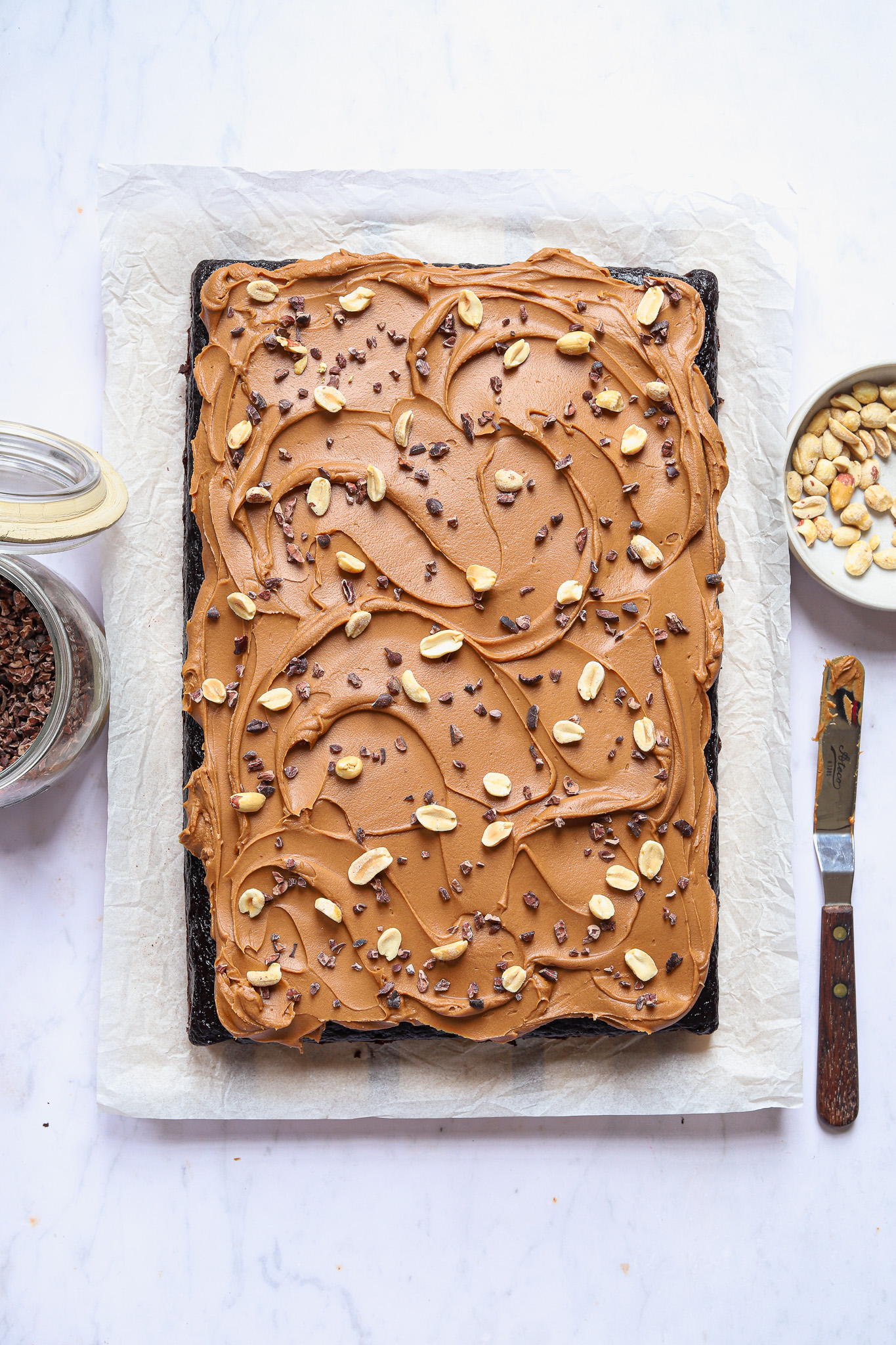
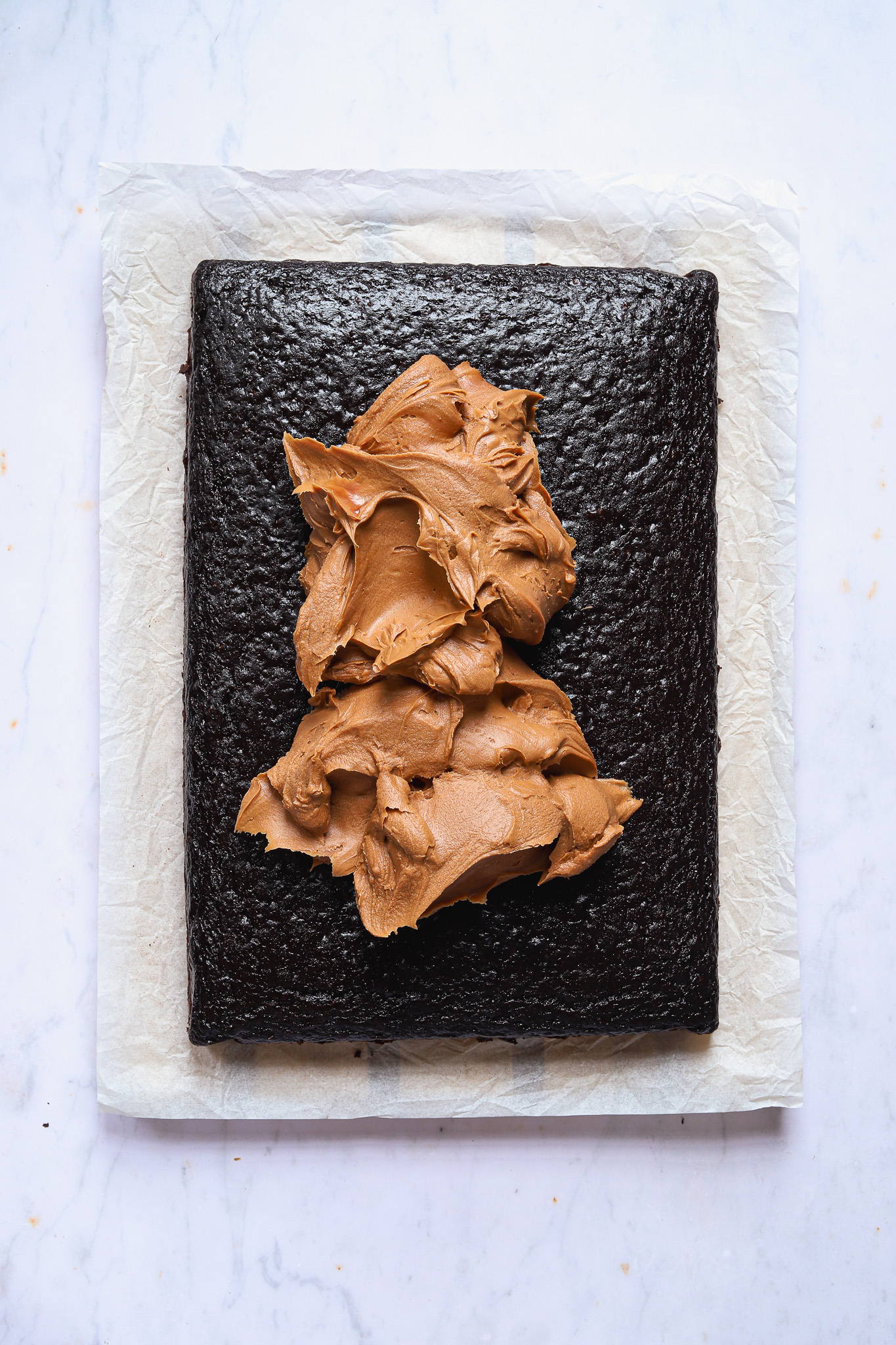
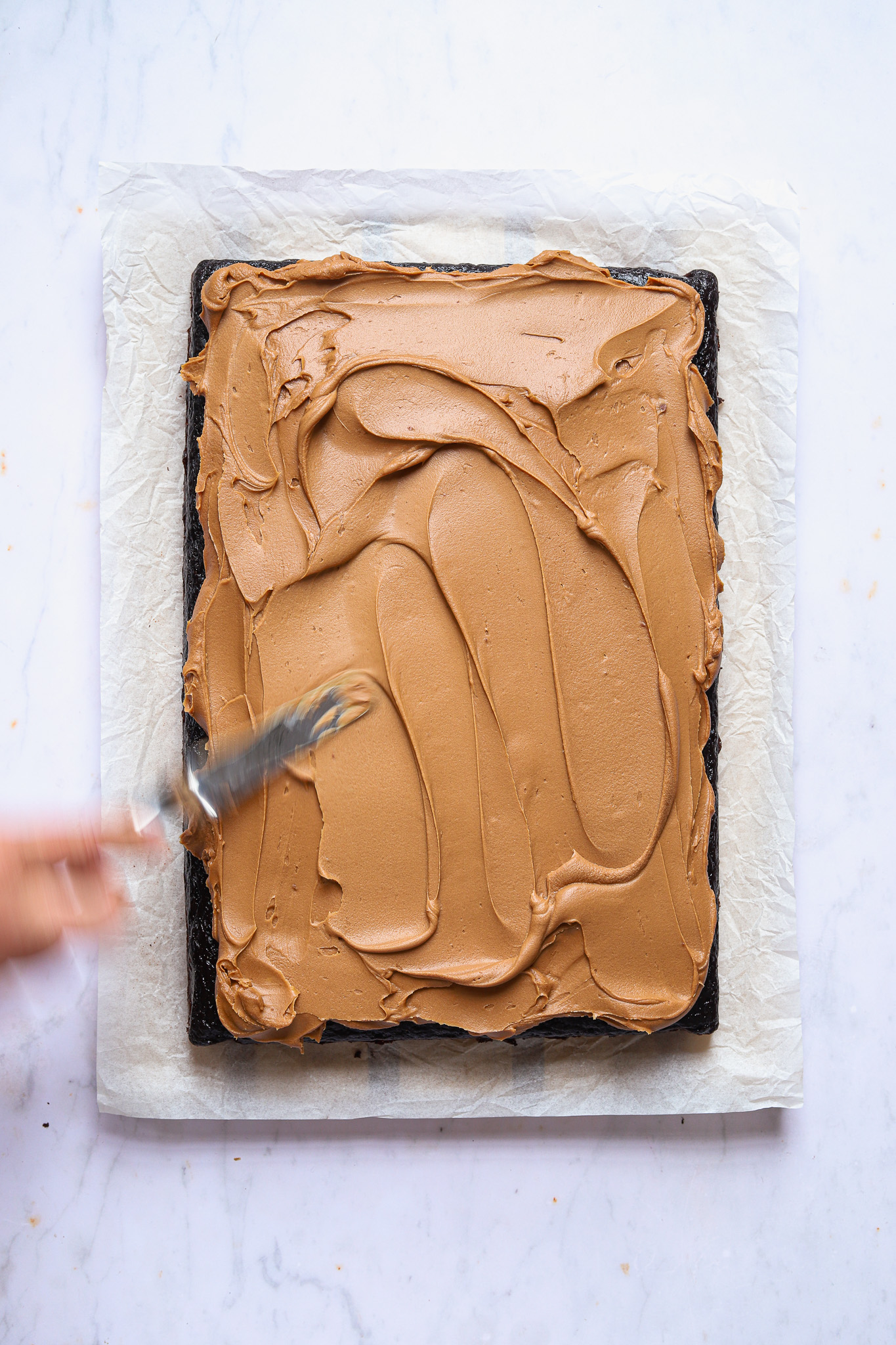
When you’re ready to decorate, use a hand mixer to whip the cooled ganache until light-colored, smooth, and spreadable, like thick buttercream. Be careful not to overmix—if you do, it will get very grainy and, unfortunately, there is no way to “ungrain” it (see the photo below). Better to under mix than over. If the frosting feels too loose and you don’t want to whisk it for fear of overdoing it, pop it in the fridge for 10 more minutes, then whisk to check the consistency, repeating this step as necessary. Dollop the frosting all over the cooled cake, then use an offset spatula to cover the cake completely, swirling the ganache in artistic swoops, if you like. Sprinkle liberally with peanuts and nibs.
Enjoy!
*If you want to make this ahead, you can chill the ganache overnight. When you want to use it, take it out of the fridge and warm it in short bursts either in a microwave or over a stove (using a metal bowl), stirring in between each, until you get that soft texture.
Note: I had never had issues with split ganache until the day I decided to shoot this cake. I remade the cake a few days later just so I could reshoot it, but if you’d like to see what splitting a ganache frosting looks like, see the photo comparison below. It’s still tasty to eat, even if it looks hideous, so if this does happen to you just hand it out to neighbors with a Post-It note stuck on the tin foil saying, “Ugly but delicious,” like I did.